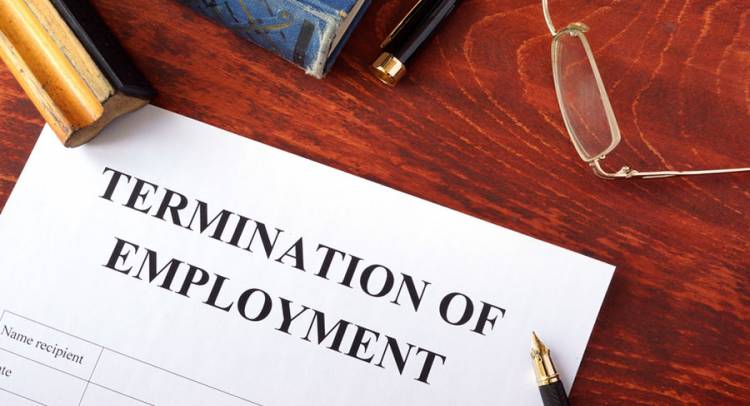
Termination of an Employee during Covid-19
Employment
in India is divided into two sections, the labour sector and the employment
sector. This divide comes from the definition of ‘Workman’ in the Industrial
Disputes Act. The result of making such a definition and its connection to the
definition of ‘factory’ lead to the specific conundrum, where a majority of the
labour law statutes in India don’t apply to a large section of employees in
India. This paper focusses on that part of the Indian workforce in the
organized sector that is dependent on employment contracts for their continued relationship
with their employee. Specifically, this paper wants to discuss this
relationship between employer and employee in the specific context of the
current pandemic and the lockdown. It is well known that employers have been
cutting down on their workforce in light of dwindling finances and prospects
for recovery for the economy. The government has swooped in and has attempted
to remedy the situation by instituting nodal offices to the labour departments
that will receive complaints about unfair and unethical termination of
employees.
In light of the
pandemic, the government has further sent out advisories by both the MHA and
Labour departments. These advisories target this specific group of unprotected
employees. At the same time, the government itself cannot do much in terms of
interim protection, it has exhorted companies to refrain from sacking employees
en-masse, and further to not exacerbate the situations that might cause
employees to resign. The respective states have passed their own notifications
mandating that employees shall be paid their wages as usual, and employers
shall be proceeded against under the Disaster Management Act, if they indulge
in large scale retrenchment. This comes from the fact that the notifications of
the government after the lockdown had been instituted have all been issued in the
strength of the Disaster Management Act. For that reason, this paper will
consider conventional cases of termination of employment of contract-based
employees, and answer the thesis from that perspective.
It is important
to note that even though the primary reason why employees are being removed is
the Coronavirus and ensuing lockdown, companies are not utilizing any new means
and justifications to lay off the employees, it is still being done through the
contractual limitations and provisions already made available and notified to
both parties to the employment contract.
The
government has made further provisions ofthe payment of wages to workmen and
their termination among other things: These measures are welcome, and necessary
respite in lightof the possibility and potential of misuse of the contractual
relationship that employers share with their employees. The reason why these
measures have been taken is that employers have a far greater say and power in
the negotiations for deciding the terms and conditions of the contract that is
agreed upon between the parties at the time. This paper wants to explore the
options the employer has in terms of his termination, and if at all, there are
remedies that can be pursued.
The
At-Will Theory of Employment
The
fundamental principle of contract-based employment is the understanding that it
is not contractual employment as defined in the Contract Workers Act. This
paper only deals with the peculiar situation of employer/employee relationships
thatare pre-determined through a contractual agreement. In general, these
contracts already contain the conditions of employment, and there is little
left for speculation, this includes even the conditions for termination of
employment. Most contracts, and interpretations of these contracts are
constructed around the ‘at will’ theory of employment. This theory propagates that
the employer is free to determine the role of the employee at will, and this
has been used as a justification in situations where employees have been fired
despite the lack of any apparent misgivings.
This
‘at will’ theory of interpretation of employment contracts is popular in India,
albeit with some modifications to suit the overall policy of employment laws.
In order to understand this ‘at will’ principle, let us look at the case ofDeMasse v ITT Corp.194
Ariz. 500in this case the company had additional rules of conduct
guidelines in the employee handbook and when one of the employees sued the
company for wrongful termination, the company referred to the employee handbook
and argued that since some conditions of employer/ employee relationship cannot
be pre-determined, it is necessary that the ‘at will’ principle should be
extended to provisions that are determined after the conclusion of the original
contract. This means that the employer hasthe absolute power to amend and
modify the terms of employment (and therefore the termination) at any time
during the pendency of the employment, provided that due notice has been given
(this distinction was made in Gower v
North Sound Bank957 P.2d 811 Wash.
Ct. App.1998). In India, the treatment of employment is somewhat
similar. Before moving on to understand the precedent of the contractual
relationship between parties, one needs to bear in mind that during the current
pandemic, the governmenthas put out particular guidelines which mandate that wrongful
and excessive firing is not permissible, and in the same notification,
companies were instructed on the accruing penalties in the event of either
terminating employment or making detrimental changes to the designation of the
employee during the incidence of the pandemic. It is important to note that
there is still no protection or standardized dispute resolution for employee
disputes, neither is there a standard statute that employees can make claims
under. The Shops and Commercial Establishments Act is the best point of reference
to protecting the rights of private employees, most states have their personal Shops,
and Commercial Establishments Act, the general understanding from perusing the
different state-specific acts is that there is no limitation on the grounds for
termination of employment, rather merely a limitation on the procedure. In most
states, more likely than not, employees cannot be terminated without a 30-day
notice if they have served more than 3 months, and if they served less, they
are entitled merely to a 14-day notice. These acts make reference to wrongful
termination in the context that the procedures such as payment of severance
bond, due notice period (in Tamil Nadu and Karnataka there is no time specified
for notice of termination, what is mentioned is just a reasonable notice
period). These acts leave the grounds of termination up to the specific
employer and in the event that such termination is based on a fundamental
breach of contract, even that notice period is subject to waiver.
Precedent
and Treatment of Employment Contracts by SC and High Courts
In
this light, this paper wants to take a look at a few cases that demonstrate the
relationship between a contract-based employee and his employer. The best
example is the Neha Dhar v National Airways Company(2011) 1 Cal, Lt.
284 case, this was a blatant case of arbitrary termination. The petitioner,
in this case, was fired from her position as air hostess because she was
‘overweight’ this was a matter of contention as the petitioner argues on the
basis of Article 14 against discrimination on the basis for her physical
condition. Upon examination, the court held that the employment contract that
she signed at the time of joining required a minimum and maximum weight
restriction. In that case, it was decided that despite the nature of the terms
of employment, due to the mutual nature of an employment contract, these conditions
once accepted by showing of assent by the employee couldn’t be reneged
unilaterally by the employee.
A
similar example can be seen in Ramneet
Singh Chahal v Oracle Ltd.where the essential claim of the terminated
employee was a request to reinstatement to its previous position upon
establishing that his termination was motivated by illegal motes. The court on
the strength of previous Supreme Court decision in S.K. Shetty v Bharat Nidhi Ltd. AIR 1958 SC 12stated that
a claim of reinstatement was not statutorily provided for. The best remedy a
private employee can hope for in action against his employer is one for payment
of back-dated-wages and a declaration that the termination is illegal in
nature. To put in simpler terms, as held in Binny Ltd. And Ors v. Sadashivnan and Ors.(2005) 6 SCC 257The general
principles of administrative laws do not apply to private employment, in that
case, the determinate fact in issue was whether the employees would be workmen
and in the event, they weren’t due to a recent change in designation, whether
the same principles of industrial and administrative law applied to them. The
main takeaway from this case is that the determinate factor in applicability of
the ‘at will’ principle depends more on the tasks fulfilled by the employee
rather than the official designation.
Further,
in the case of Shri Satya Narayan Garg
v DCM Ltd. (2012) 127 Drj 216
It was held on the strength of mitigation of damages, and the manner in which
the Supreme Court interpreted the case, employees cannot claim
compensation for an indefinite period after their termination, and in
situations where compensation for wrongful termination is claimed, the
expectation is that an employee will seek out alternative employment in the
meantime. This case is a reference for the quantum of compensation for a
servant upon the termination of his services.The court held that the compensation should extend only to such
limited period as the illegal termination has affected the employee.
A
similar decision was rendered in the case of GE Transportation v Shri Tarun Bhargava(2012) 190 DLT 195, here the court held that since the
employee wasn’t governed by the Industrial dispute act, and that the specific
relief act didn’t provide for specific performance of a determinable contract,
the agreed-upon period of one month’s notice shall validly terminate the
employment and no compensation for the period that the petitioner was disabled
from the performance.
Further
in the discussion on grounds for termination, reference is made to Air India Corporation v VA Rebellow1972 AIR 1343where it was held
that in order for an employment contract to be terminated, a lack of confidence
in an employee is sufficient grounds. In this specific case, the company stated
that since the petitioners’ job was to deal with the air hostesses and act in
confidence, the aspect of confidence of the management in his capacity is
important. Despite the arbitrary nature of this termination, it shall hold.
Employers and Covid-19 No
The
Coronavirus outbreak has led to numerous problems in the country. The chain of
demand and supply is disturbed not only in the country but across the world.
Though work from is one of the thing, being suggested by most of the companies,
there are sectors where work from is not feasible as it includes fieldwork,
manufacturing units etc. Certain
sectors are having a hard time opting for work from home culture. This includes
the banking sector or any sector where data to be shared is highly confidential
and needs to be protected.
All this is obvious to create a huge impact on
the business and the job of the employees. Therefore, there arises a need to
safeguard the interest of such employees so that they can feed themselves and
their families, in these hard times.
Below are a few reasons that employers are
listing while terminating an employee during the pandemic:
·
Lack of projects and
work available to the employer himself.
·
No access to financial
supports due to lack of work and lack of investors.
·
Work from home of
remote work is not possible.
·
If an employer and employee have not been able to agree to alternative
working arrangements.
·
Consistency of work has been lowered relatively.
·
“Frustration of contract’ grounds wherein the employer would be unable
to determine with any certainty how they may be able to resume
operations.
·
Inefficiency.
·
Violation of confidential provisions.
·
Breach of employment contract.
Employees and Covid-19
The
country has shifted to digitalization due to the sudden outbreak of Coronavirus
in the country. It is hard to believe, but its been two months, that people are
locked inside their houses and non-essential offices are shut. Most of the
companies, employees have been asked to work from home so that that their work
is not stopped, and income can be generated. The question which arises during
this situation is that what are the rights of the employees under such
circumstances?
Remedies available to the employees
For an employee who falls under the
category of a ‘workman’, their conditions of service are governed by the
Industrial Dispute Act, 1947 (‘Act’). Section 2A of the Act provides that
dismissal of an individual workman will be deemed to be an industrial dispute.
·
The above dispute
can be settled by way of adjudication or by conciliation, and in case the
matter is settled by conciliation, the dispute comes to an end. In case the
dispute is not settled, the dispute is referred to adjudication.
·
When an employee is
terminated who is a non-workman, his terms and conditions of service are
governed by the letter of appointment or employment contract, provided at the
joining date, issued by the employer and the Indian Contract Act, 1872 and the
State-Specific Shops and Establishment Legislations as well as the various
orders that have been issued by various departments of central and state
governments during the lockdown. A non-workman has the right to approach the
civil court and/or the court designated under the Shops and Establishments
legislation seeking payment of any unpaid dues and/or damages for wrongful
termination if the termination was against the terms agreed by the employer.
·
During the nationwide
lockdown, the companies can ask the employees to work from home, and for this,
the employee would be entitled to full salaries.
·
Talking about the
payments to employees, the government on March 21, 2020, issued a circular
which provides that even if a work unit is non-functional due to the virus, the
employers are entitled to consider the employees as working. The various state
government has also issued notices that such employees should be paid.
·
The Maharashtra
government also mentioned that no employer can deduct salaries or terminate the
employee on the basis of this pandemic. It especially implies on the contract
or casual workers.
·
The Ministry of home
affairs issued a circular on March 29, 2020, which informed the state
governments and ministries to
ensure that the employers of all the industries, shops, companies, etc. pay
full wages to the employees without any deductions, during the lockdown.
·
Employers cannot reduce the working hours, to get a reason to
reduce the salaries of the employees to control the loss of the business.
Moreover, the employers are not entitled to reduce the workforce to safeguard
the business from the impact of Covid-19. Both such acts are prohibited by the
notification issued by the Ministry of Home Affairs on 29th March
2020.
·
Employers should make sure that the working hours of the
employees are not exceeded, then their actual working hours. Since there is no
statute to govern the concept of work from home therefore general employment
laws will be applicable.
·
However, these are mere
guidelines and not enforceable in the court of law. The employee can send a
formal notice to the company explaining the unfair dismissal, if the issue is
not settled, then it can be taken to court.
·
The employee has the
right to file a case against the employer for unfair dismissal in the Labour
Court.
·
Furthermore, the
principles of natural justice are still applicable to an employee (Delhi Transport Corpn. V DTC Mazdoor
Sabha1991 AIE 101),
which shall allow him to be heard and be given due representation during the
termination process. Though even in this regard, most companies prohibit the
presence of lawyers during the internal termination hearings. Terminated
employees are also permitted to raise a claim in the absolute if due notice or
time has not been provided to him to formulate a response and justification for
the alleged wrongful conduct.
Conclusion
These
cases are a sample of the many instances where private employees governing through
a contract are able to exert absolute control over the termination of work of a
private employee. The states had the option to legislate on the status of such
employees when making their respective amendments to the state Shops and
Commercial Establishment Acts. However, such changes were only made in the
limited scope of procedure of termination rather than any governing principles
for the substantial element thereof. One thing needs to be kept in mind, is
that an employee has the absolute right to pursue a legal remedy in the
instance of wrongful termination; and the employer is mandated through contract
law to provide for a dispute resolution mechanism.
Despite
all this, the pursuits of an employee wrongfully terminated fall short of
reinstatement. As we have seen in precedent above discussed, employment
contracts can determine the outcome of a claim made for wrongful employment,
and since they are determinate contracts, an employee thus terminated has the
capacity to initiate a proceeding in a forum of the mutual choosing, but will
never be able to enjoy the full gamut of protection and remedy a workman is
privy to.
The author of this
blog/Article is Kishan Dutt Kalaskar, a Retired Judge and practising advocate
having an experience of 35+ years in handling
different legal matters. He has prepared and got published Head Notes for more
than 10,000 Judgments of the Supreme
Court and High Courts in different Law Journals. From his experience he wants to share this
beneficial information for the individuals having any issues with respect
to their related matters .
Author
:
Kishan Dutt Kalaskar
Advocate (Retired Judge)
Bengaluru-560003
Mob: 9686971935









.png "Legal Notice issued to CM Bhagwant Maan for defamation by Shri. Sardar Sukhbir Singh Badal")