SoOLEGAL
Transaction Services Agreement :
By
registering yourself with SoOLEGAL, it is understood and agreed by
you that the Terms and Conditions under the Transaction Services
Terms shall be binding on you at all times during the period of
registration and notwithstanding cessation of your registration with
SoOLEGAL certain Terms and Conditions shall survive.
"Your
Transaction" means any Transaction of Documents/
Advices(s), advice and/ or solution in the form of any written
communication to your Client made by you arising out of any advice/
solution sought from you through the SoOLEGAL Site.
Transacting
on SoOLEGAL Service Terms:
The
SoOLEGAL Payment
System Service
("Transacting on SoOLEGAL") is a Service that allows you to
list Documents/ Advices which comprise of advice/ solution in the
form of written communication to your Client who seeks your advice/
solution via SoOLEGAL Site and such Documents/ Advices being for
Transaction directly via the SoOLEGAL Site. SoOLEGAL
Payment Service
is operated by Sun Integrated Technologies and Applications .
TheSoOLEGAL
Payment System
Service Terms are part of the Terms & Conditions
of SoOLEGAL Services Transaction Terms and Conditionsbut unless
specifically provided otherwise, concern and apply only to your
participation in Transacting on SoOLEGAL. BY REGISTERING FOR OR USING
SoOLEGAL
PAYMENT SYSTEM ,
YOU (ON BEHALF OF YOURSELF OR THE FIRM YOU REPRESENT) AGREE TO BE
BOUND BY THE TRANSACTIONS TRANSACTION TERMS AND CONDITIONS.
Unless
otherwise defined in this Documents/ Advice or Terms & Conditions
which being the guiding Documents/ Advice to this Documents/ Advice,
all capitalized terms have the meanings given them in the
Transactions Transaction Terms and Conditions.
S-1.
Your Documents/ Advice Listings and Orders
S-1.1
Documents/ Advices
Information. You
will, in accordance with applicable Program Policies, provide in the
format we require. Documents/ Advices intended to be sold should be
accurate and complete and thereafter posted through the SoOLEGAL
Site and promptly update such information as necessary to ensure it
at all times that such Documents/ Advices remain accurate and
complete. You will also ensure that Your Materials, Your Documents/
Advices (including comments) and your offer and subsequent
Transaction of any ancillary Documents/ Advice pertaining to the
previous Documents/ Advices on the SoOLEGAL Site comply with all
applicable Laws (including all marking and labeling
requirements) and do not contain any sexually explicit, defamatory or
obscene materials or any unlawful materials. You may not provide any
information for, or otherwise seek to list for Transaction on the
SoOLEGAL Site, any Excluded Documents/ Advices; or provide any URL
Marks for use, or request that any URL Marks be used, on the SoOLEGAL
Site. In any event of unlawful Documents/ Advices made available for
Transaction by you on SoOLEGAL site, it is understood that
liabilities limited or unlimited shall be yours exclusively to which
SoOLEGAL officers, administrators, Affiliates among other authorized
personnel shall not be held responsible and you shall be liable to
appropriate action under applicable laws.
S-1.2
Documents/ Advices Listing; Merchandising; Order Processing. We
will list Your Documents/ Advices for Transaction on the SoOLEGAL
Site in the applicable Documents/ Advices categories which are
supported for third party REGISTERED USERs generally on the SoOLEGAL
Site on the applicable Transacting Associated Properties or any other
functions, features, advertising, or programs on or in connection
with the SoOLEGAL Site). SoOLEGAL reserves its right to restrict at
any time in its sole discretion the access to list in any or all
categories on the SoOLEGAL Site. We may use mechanisms that rate, or
allow users to rate, Your Documents/ Advices and/or your performance
as a REGISTERED USER on the SoOLEGAL Site and SoOLEGAL may make these
ratings and feedback publicly available. We will provide Order
Information to you for each of Your Transactions. Transactions
Proceeds will be paid to you only in accordance with Section S-6.
S-1.3
a. It is mandatory to secure an advance amount from Client where
SoOLEGAL Registered Consultant will raise an invoice asking for a 25%
advance payment for the work that is committed to be performed for
the Client of such SoOLEGAL Registered Consultant. The amount will be
refunded to the client if the work is not done and uploaded to
SoOLEGAL Repository within the stipulated timeline stated by SoOLEGAL
Registered Consultant.
b.
SoOLEGAL Consultant will be informed immediately on receipt of
advance payment from Client which will be held by SoOLegal and will
not be released to either Party and an email requesting the
Registered Consultant will be sent to initiate the assignment.
c.
The Registered Consultant will be asked on the timeline for
completion of the assignment which will be intimated to Client.
d.
Once the work is completed by the consultant the document/ advice
note will be in SoOLEGAL
repository and once Client makes rest of the payment, the full amount
will be remitted to the consultant in the next payment cycle and the
document access will be given to the client.
e.
In the event where the Client fails to make payment of the balance
amount
within 30 days from the date of upload ,
the Registered Consultant shall receive
the advance amount paid by the Client without any interest in the
next time cycle
after the lapse of 30 days.
S-1.4
Credit Card Fraud.
We
will not bear the risk of credit card fraud (i.e. a fraudulent
purchase arising from the theft and unauthorised
use of a third party's credit card information) occurring in
connection with Your Transactions. We may in our sole discretion
withhold for investigation, refuse to process, restrict download for,
stop and/or cancel any of Your Transactions. You will stop and/or
cancel orders of Your Documents/ Advices if we ask you to do so. You
will refund any customer (in accordance with Section
S-2.2)
that has been charged for an order that we stop or cancel.
S-2.
Transaction and Fulfilment, Refunds and Returns
S-2.1
Transaction and Fulfilment:
Fulfilment
– Fulfilment is categorised under the following heads:
1.
Fulfilment by Registered User/ Consultant - In the event of Client
seeking consultation, Registered User/ Consultant
has
to ensure the quality of the product and as per the requirement of
the Client and if its not as per client, it will not be SoOLEGAL’s
responsibility and it will be assumed
that the Registered User/ Consultant and the Client have had
correspondence before assigning the work to the Registered User/
Consultant.
2.
Fulfilment by SoOLEGAL - If the Registered User/ Consultant has
uploaded the Documents/ Advice in SoOLEGAL Site, SoOLEGAL Authorised
personnel does not access such Documents/ Advice and privacy of the
Client’s Documents/ Advice and information is confidential and will
be encrypted and upon payment by Client, the Documents/ Advice is
emailed by SoOLEGAL to them. Client’s information including email
id will be furnished to SoOLEGAL by Registered User/ Consultant.
If
Documents/ Advice is not sent to Client, SoOLEGAL will refund any
amount paid to such Client’s account without interest within 60
days.
3.
SoOLEGAL will charge 5% of the transaction value which is subject to
change with time due to various economic and financial factors
including inflation among other things, which will be as per
SoOLEGAL’s discretion
and will be informed to Registered Users about the same from time to
time. Any tax applicable on Registered User/ Consultant is payable by
such Registered User/ Consultant and not by SoOLEGAL.
4.
SoOLEGAL will remit the fees (without any interest) to its Registered
User/ Consultant every 15 (fifteen) days. If there is any discrepancy
in such payment, it should be reported to Accounts Head of SoOLEGAL
(accounts@soolegal.com) with all relevant account statement within
fifteen days from receipt of that last cycle payment. Any discrepancy
will be addressed in the next fifteen days cycle. If any discrepancy
is not reported within 15 days of receipt of payment, such payment
shall be deemed accepted and SoOLEGAL shall not entertain any such
reports thereafter.
5.
Any Registered User/ Consultant wishes to discontinue with this, such
Registered User/ Consultant shall send email to SoOLEGAL and such
account will be closed and all credits will be refunded to such
Registered User/ Consultant after deducation of all taxes and
applicable fees within 30 days. Other than as described in the
Fulfilment by SoOLEGAL Terms & Conditions (if applicable to you),
for the SoOLEGAL Site for which you register or use the Transacting
on SoOLEGAL Service, you will: (a) source, fulfil and transact with
your Documents/ Advices, in each case in accordance with the terms of
the applicable Order Information, these Transaction Terms &
Conditions, and all terms provided by you and displayed on the
SoOLEGAL Site at the time of the order and be solely responsible for
and bear all risk for such activities; (a) not cancel any of Your
Transactions except as may be permitted pursuant to your Terms &
Conditions appearing on the SoOLEGAL Site at the time of the
applicable order (which Terms & Conditions will be in accordance
with Transaction Terms & Conditions) or as may be required
Transaction Terms & Conditions
per
the terms laid in this Documents/ Advice; in each case as requested
by us using the processes designated by us, and we may make any of
this information publicly available notwithstanding any other
provision of the Terms mentioned herein, ensure that you are the
REGISTERED USER of all Documents/ Advices made available for listing
for Transaction hereunder; identify yourself as the REGISTERED USER
of the Documents/ Advices on all downloads or other information
included with Your Documents/ Advices and as the Person to which a
customer may return the applicable Documents/ Advices; and
S-2.2
Returns and Refunds. For
all of Your Documents/ Advices that are not fulfilled using
Fulfilment by SoOLEGAL, you will accept and process returns, refunds
and adjustments in accordance with these Transaction Terms &
Conditions and the SoOLEGAL Refund Policies published at the time of
the applicable order, and we may inform customers that these policies
apply to Your Documents/ Advices. You will determine and calculate
the amount of all refunds and adjustments (including any taxes,
shipping of any hard copy and handling or other charges) or other
amounts to be paid by you to customers in connection with Your
Transactions, using a functionality we enable for Your Account. This
functionality may be modified or discontinued by us at any time
without notice and is subject to the Program Policies and the terms
of thisTransaction Terms & Conditions Documents/ Advice. You will
route all such payments through SoOLEGAL We will provide any such
payments to the customer (which may be in the same payment form
originally used to purchase Your Documents/ Advices), and you will
reimburse us for all amounts so paid. For all of Your Documents/
Advices that are fulfilled using Fulfilment by SoOLEGAL, the SoOLEGAL
Refund Policies published at the time of the applicable order will
apply and you will comply with them. You will promptly provide
refunds and adjustments that you are obligated to provide under the
applicable SoOLEGAL Refund Policies and as required by Law, and in no
case later than thirty (30) calendar days following after the
obligation arises. For the purposes of making payments to the
customer (which may be in the same payment form originally used to
purchase Your Documents/ Advices), you authorize us to make such
payments or disbursements from your available balance in the Nodal
Account (as defined in Section S-6). In the event your balance in the
Nodal Account is insufficient to process the refund request, we will
process such amounts due to the customer on your behalf, and you will
reimburse us for all such amount so paid.
S-5.
Compensation
You
will pay us: (a) the applicable Referral Fee; (b) any applicable
Closing Fees; and (c) if applicable, the non-refundable Transacting
on SoOLEGAL Subscription Fee in advance for each month (or for each
transaction, if applicable) during the Term of this Transaction Terms
& Conditions. "Transacting on SoOLEGAL Subscription Fee"
means the fee specified as such on the Transacting
on SoOLEGALSoOLEGAL Fee Schedule for the SoOLEGAL Site at
the time such fee is payable. With respect to each of Your
Transactions: (x) "Transactions Proceeds" has the
meaning set out in the Transaction Terms & Conditions;
(y) "Closing Fees" means the applicable fee, if
any, as specified in the Transacting
on SoOLEGAL Fee Schedule for the SoOLEGAL Site; and
(z) "Referral
Fee" means
the applicable percentage of the Transactions Proceeds from Your
Transaction through the SoOLEGAL Site specified on the Transacting
on SoOLEGAL Fee Schedule for the SoOLEGAL Site at the time
of Your Transaction, based on the categorization by SoOLEGAL of the
type of Documents/ Advices that is the subject of Your Transaction;
provided, however, that Transactions Proceeds will not include any
shipping charge set by us in the case of Your Transactions that
consist solely of SoOLEGAL-Fulfilled Documents/ Advices. Except as
provided otherwise, all monetary amounts contemplated in these
Service Terms will be expressed and provided in the Local Currency,
and all payments contemplated by this Transaction Terms &
Conditions will be made in the Local Currency.
All
taxes or surcharges imposed on fees payable by you to SoOLEGAL will
be your responsibility.
S-6
Transactions Proceeds & Refunds.
S-6.1.Nodal
Account. Remittances
to you for Your Transactions will be made through a nodal account
(the "Nodal Account") in accordance with the directions
issued by Reserve Bank of India for the opening and operation of
accounts and settlement of payments for electronic payment
transactions involving intermediaries vide its notification
RBI/2009-10/231 DPSS.CO.PD.No.1102 / 02.14.08/ 2009-10 dated November
24, 2009. You hereby agree and authorize us to collect payments on
your behalf from customers for any Transactions. You authorize and
permit us to collect and disclose any information (which may include
personal or sensitive information such as Your Bank Account
information) made available to us in connection with the Transaction
Terms & Conditions mentioned hereunder to a bank, auditor,
processing agency, or third party contracted by us in connection with
this Transaction Terms & Conditions.
Subject
to and without limiting any of the rights described in Section 2 of
the General Terms, we may hold back a portion or your Transaction
Proceeds as a separate reserve ("Reserve").
The Reserve will be in an amount as determined by us and the Reserve
will be used only for the purpose of settling the future claims of
customers in the event of non-fulfillment of delivery to the
customers of your Documents/ Advices keeping in mind the period for
refunds and chargebacks.
S-6.2. Except
as otherwise stated in this Transaction Terms & Conditions
Documents/ Advice (including without limitation Section 2 of the
General Terms), you authorize us and we will remit the Settlement
Amount to Your Bank Account on the Payment Date in respect of an
Eligible Transaction. When you either initially provide or later
change Your Bank Account information, the Payment Date will be
deferred for a period of up to 14 calendar days. You will not have
the ability to initiate or cause payments to be made to you. If you
refund money to a customer in connection with one of Your
Transactions in accordance with Section S-2.2, on the next available
Designated Day for SoOLEGAL Site, we will credit you with the amount
to us attributable to the amount of the customer refund, less the
Refund Administration Fee for each refund, which amount we may retain
as an administrative fee.
"Eligible
Transaction"
means Your Transaction against which the actual shipment date has
been confirmed by you.
"Designated
Day" means any particular Day of the week designated by SoOLEGAL
on a weekly basis, in its sole discretion, for making remittances to
you.
"Payment
Date" means the Designated Day falling immediately after 14
calendar days (or less in our sole discretion) of the Eligible
Transaction.
"Settlement
Amount" means Invoices raised through SoOLEGAL Platform (which
you will accept as payment in full for the Transaction and shipping
and handling of Your Documents/ Advices), less: (a) the Referral Fees
due for such sums; (b) any Transacting on SoOLEGAL Subscription Fees
due; (c) taxes required to be charged by us on our fees; (d) any
refunds due to customers in connection with the SoOLEGAL Site; (e)
Reserves, as may be applicable, as per this Transaction Terms &
Conditions; (f) Closing Fees, if applicable; and (g) any other
applicable fee prescribed under the Program Policies. SoOLEGAL shall
not be responsible for
S-6.3. In
the event that we elect not to recover from you a customer's
chargeback, failed payment, or other payment reversal (a "Payment
Failure"), you irrevocably assign to us all your rights, title
and interest in and associated with that Payment Failure.
S-7.
Control of Site
Notwithstanding
any provision of this Transaction Terms & Conditions, we will
have the right in our sole discretion to determine the content,
appearance, design, functionality and all other aspects of the
SoOLEGAL Site and the Transacting on SoOLEGAL Service (including the
right to re-design, modify, remove and alter the content, appearance,
design, functionality, and other aspects of, and prevent or restrict
access to any of the SoOLEGAL Site and the Transacting on SoOLEGAL
Service and any element, aspect, portion or feature thereof
(including any listings), from time to time) and to delay or suspend
listing of, or to refuse to list, or to de-list, or require you not
to list any or all Documents/ Advices on the SoOLEGAL Site in our
sole discretion.
S-8.
Effect of Termination
Upon
termination of this Contract, the Transaction Terms & Conditions
automatiocally stands terminated and in connection with the SoOLEGAL
Site, all rights and obligations of the parties under these Service
Terms with regard to the SoOLEGAL Site will be extinguished, except
that the rights and obligations of the parties with respect to Your
Transactions occurring during the Term will survive the termination
or expiration of the Term.
"SoOLEGAL
Refund Policies" means
the return and refund policies published on the SoOLEGAL Site.
"Required
Documents/ Advices Information" means,
with respect to each of Your Documents/ Advices in connection with
the SoOLEGAL Site, the following (except to the extent expressly not
required under the applicable Policies) categorization within each
SoOLEGAL Documents/ Advices category and browse structure as
prescribed by SoOLEGAL from time to time, Purchase Price; Documents/
Advice Usage, any text, disclaimers, warnings, notices, labels or
other content required by applicable Law to be displayed in
connection with the offer, merchandising, advertising or Transaction
of Your Documents/ Advices, requirements, fees or other terms and
conditions applicable to such Documents/ Advices that a customer
should be aware of prior to purchasing the Documents/ Advices;
"Transacting
on SoOLEGAL Launch Date" means
the date on which we first list one of Your Documents/ Advices for
Transaction on the SoOLEGAL Site.
"URL
Marks" means
any Trademark, or any other logo, name, phrase, identifier or
character string, that contains or incorporates any top level domain
(e.g., .com, co.in, co.uk, .in, .de, .es, .edu, .fr, .jp) or any
variation thereof (e.g., dot com, dotcom, net, or com).
"Your
Transaction" is
defined in the Transaction Terms & Conditions; however, as used
in Terms & Conditions, it shall mean any and all such
transactions whereby you conduct Transacting of Documents/ Advices or
advice sought from you by clients/ customers in writing or by any
other mode which is in coherence with SoOLEGAL policy on SoOLEGAL
site only.
Taxes
on Fees Payable to SoOLEGAL. In
regard to these Service Terms you can provide a PAN registration
number or any other Registration/ Enrolment number that reflects your
Professional capacity by virtue of various enactments in place. If
you are PAN registered, or any professional Firm but not PAN
registered, you give the following warranties and representations:
(a)
all services provided by SoOLEGAL to you are being received by your
establishment under your designated PAN registration number; and
SoOLEGAL
reserves the right to request additional information and to confirm
the validity of any your account information (including without
limitation your PAN registration number) from you or government
authorities and agencies as permitted by Law and you hereby
irrevocably authorize SoOLEGAL to request and obtain such information
from such government authorities and agencies. Further, you agree to
provide any such information to SoOLEGAL upon request. SoOLEGAL
reserves the right to charge you any applicable unbilled PAN if you
provide a PAN registration number, or evidence of being in a
Professional Firm, that is determined to be invalid. PAN registered
REGISTERED USERs and REGISTERED USERs who provide evidence of being
in Law Firm agree to accept electronic PAN invoices in a format and
method of delivery as determined by SoOLEGAL.
All
payments by SoOLEGAL to you shall be made subject to any applicable
withholding taxes under the applicable Law. SoOLEGAL will retain, in
addition to its net Fees, an amount equal to the legally applicable
withholding taxes at the applicable rate. You are responsible for
deducting and depositing the legally applicable taxes and deliver to
SoOLEGAL sufficient Documents/ Advice evidencing the deposit of tax.
Upon receipt of the evidence of deduction of tax, SoOLEGAL will remit
the amount evidenced in the certificate to you. Upon your failure to
duly deposit these taxes and providing evidence to that effect within
5 days from the end of the relevant month, SoOLEGAL shall have the
right to utilize the retained amount for discharging its tax
liability.
Where
you have deposited the taxes, you will issue an appropriate tax
withholding certificate for such amount to SoOLEGAL and SoOLEGAL
shall provide necessary support and Documents/ Adviceation as may be
required by you for discharging your obligations.
SoOLEGAL
has the option to obtain an order for lower or NIL withholding tax
from the Indian Revenue authorities. In case SoOLEGAL successfully
procures such an order, it will communicate the same to you. In that
case, the amounts retained, shall be in accordance with the
directions contained in the order as in force at the point in time
when tax is required to be deducted at source.
Any
taxes applicable in addition to the fee payable to SoOLEGAL shall be
added to the invoiced amount as per applicable Law at the invoicing
date which shall be paid by you.F.11.
Indemnity
|
|
Category
and Documents/ Advice Restrictions
Certain
Documents/ Advices cannot be listed or sold on SoOLEGAL site as a
matter of compliance with legal or regulatory restrictions (for
example, prescription drugs) or in accordance with SoOLEGAL
policy (for example, crime scene photos).
SoOLEGAL's
policies also prohibit specific types of Documents/ Advice
content. For guidelines on prohibited content and copyright
violations, see our Prohibited
Content list.
For
some Documents/ Advice categories, REGISTERED USERS may not create
Documents/ Advice listings without prior approval from SoOLEGAL.
|
In
addition to your obligations under Section
6 of
the Transaction Terms & Conditions, you also agree to indemnify,
defend and hold harmless us, our Affiliates and their and our
respective officers, directors, employees, representatives and agents
against any Claim that arises out of or relates to: (a) the Units
(whether or not title has transferred to us, and including any Unit
that we identify as yours pursuant to Section
F-4 regardless
of whether such Unit is the actual item you originally sent to us),
including any personal injury, death or property damage; and b) any
of Your Taxes or the collection, payment or failure to collect or pay
Your Taxes.
Registered
Users must at all times adhere to the following rules for the
Documents/ Advices they intend to put on Transaction:
The
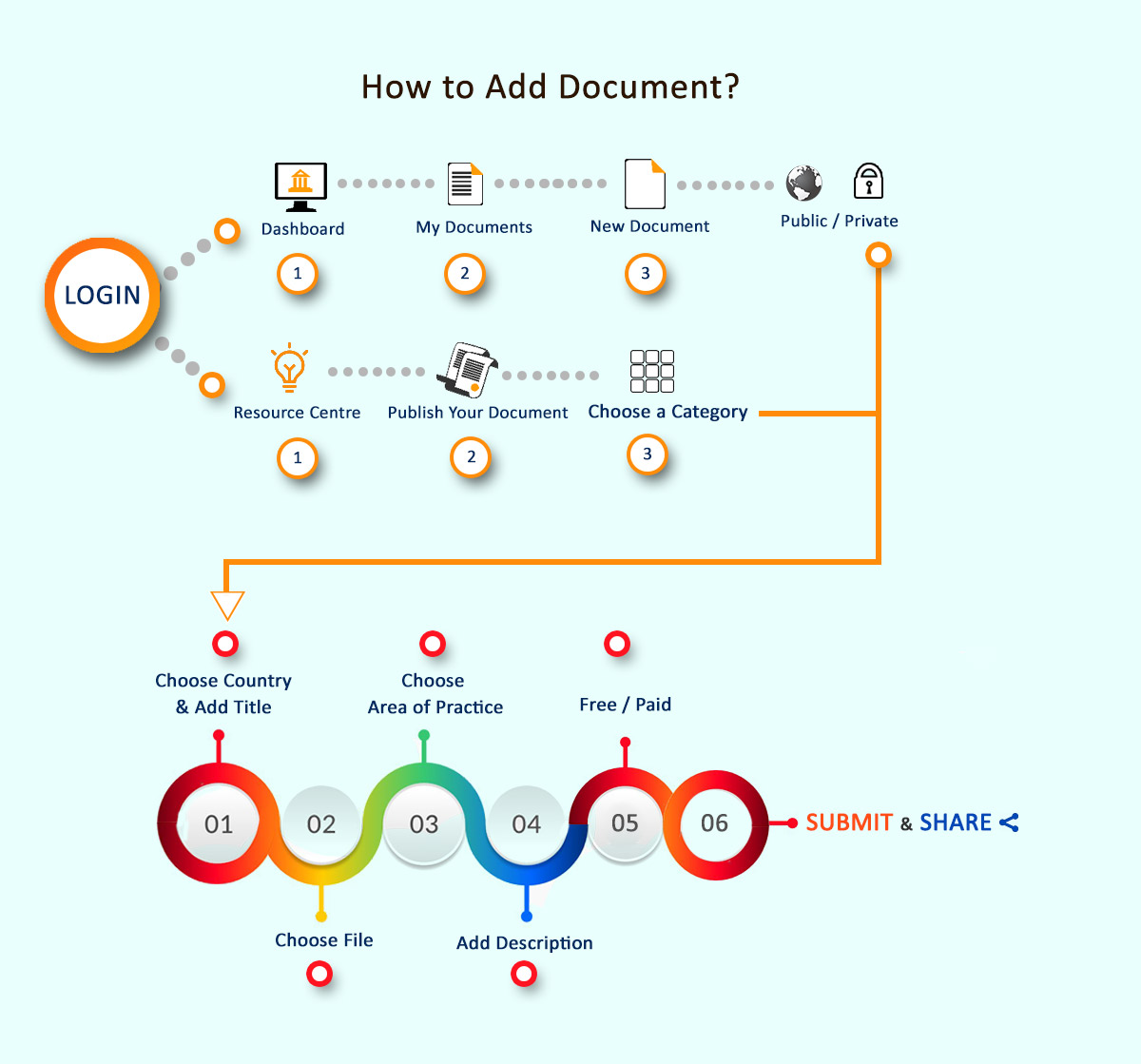
"Add a Documents/ Advice" feature allows REGISTERED USERS
to create Documents/ Advice details pages for Documents/ Advices.
The
following rules and restrictions apply to REGISTERED USERS who use
the SoOLEGAL.in "Add a Documents/ Advice" feature.
-
Using
this feature for any purpose other than creating Documents/ Advice
details pages is prohibited.
-
Any
Documents/ Advice already in the SoOLEGAL.in catalogue which is not
novel and/ or unique or has already been provided by any other
Registered User which may give rise to Intellectual Property
infringement of any other Registered User is prohibited.
-
Detail
pages may not feature or contain Prohibited
Content or .
-
The
inclusion of any of the following information in detail page titles,
descriptions, bullet points, or images is prohibited:
-
Information
which is grossly harmful, harassing, blasphemous, defamatory,
pedophilic, libelous, invasive of another's privacy, hateful, or
racially, ethnically objectionable, disparaging, relating or
encouraging money laundering or gambling, pornographic, obscene or
offensive content or otherwise unlawful in any manner whatever.
-
Availability,
price, condition, alternative ordering information (such as links to
other websites for placing orders).
-
Reviews,
quotes or testimonials.
-
Solicitations
for positive customer reviews.
-
Advertisements,
promotional material, or watermarks on images, photos or videos.
-
Time-sensitive
information
-
Information
which belongs to another person and to which the REGISTERED USER
does not have any right to.
-
Information
which infringes any patent, trademark, copyright or other
proprietary rights.
-
Information
which deceives or misleads the addressee about the origin of the
messages or communicates any information which is grossly offensive
or menacing in nature.
-
Information
which threatens the unity, integrity, defence, security or
sovereignty of India, friendly relations with foreign states, or
public order or causes incitement to the commission of any
cognizable offence or prevents investigation of any offence or is
insulting any other nation.
-
Information
containing software viruses or any other computer code, files or
programs designed to interrupt, destroy or limit the functionality
of any computer resource.
-
Information
violating any law for the time being in force.
-
All
Documents/ Advices should be appropriately and accurately classified
to the most specific location available. Incorrectly classifying
Documents/ Advices is prohibited.
-
Documents/
Advice titles, Documents/ Advice descriptions, and bullets must be
clearly written and should assist the customer in understanding the
Documents/ Advice. .
-
All
Documents/ Advice images must meet SoOLEGAL general standards as
well as any applicable category-specific image guidelines.
-
Using
bad data (HTML, special characters */? etc.) in titles,
descriptions, bullets and for any other attribute is prohibited.
-
Do
not include HTML, DHTML, Java, scripts or other types of executables
in your detail pages.
Prohibited
REGISTERED USER Activities and Actions
SoOLEGAL.com
REGISTERED USER Rules are established to maintain a transacting
platform that is safe for buyers and fair for REGISTERED USERS.
Failure to comply with the terms of the REGISTERED USER Rules can
result in cancellation of listings, suspension from use of
SoOLEGAL.in tools and reports, or the removal of transacting
privileges.
-
Attempts
to divert transactions or buyers: Any
attempt to circumvent the established SoOLEGAL Transactions process
or to divert SoOLEGAL users to another website or Transactions
process is
prohibited. Specifically, any advertisements, marketing messages
(special offers) or "calls to action" that lead, prompt,
or encourage SoOLEGALusers to leave the SoOLEGAL website are
prohibited.
Prohibited
activities include the following:
-
The
use of e-mail intended to divert customers away from the
SoOLEGAL.com Transactions process.
-
Unauthorised
& improper "Names": A
REGISTERED USER's Name (identifying the REGISTERED USER's entity on
SoOLEGAL.com) must be
a name that: accurately identifies the REGISTERED USER; is not
misleading: and the REGISTERED USER has the right to use (that is,
the name cannot include the trademark of, or otherwise infringe on,
any trademark or other intellectual property right of any person).
Furthermore, a REGISTERED USER cannot use
a name that contains an e-mail suffix such as .com, .net, .biz, and
so on.
-
Unauthorised
& improper invoicing: REGISTERED
USERS must ensure that the tax invoice is raised in the name of the
end customer who has placed an order with them through SoOLEGAL
Payment Systems platform . The tax invoice should not mention
SoOLEGAL as either a REGISTERED USER or a customer/buyer. Please
note that all Documents/ Advices listed on SoOLEGAL.com are sold by
the respective REGISTERED USERS to the end customers and SoOLEGAL is
neither a buyer nor a REGISTERED USER in the transaction. REGISTERED
USERS need to include the PAN/ Service Tax registration number in
the invoice.
-
Inappropriate
e-mail communications: All
REGISTERED USER e-mail communications with buyers must be courteous,
relevant and appropriate. Unsolicited e-mail communications with
SoOLEGAL , e-mail communications other than as necessary and related
customer service, and e-mails containing marketing communications of
any kind (including within otherwise permitted communications) are
prohibited.
-
Operating
multiple REGISTERED USER accounts: Operating
and maintaining multiple REGISTERED USER accounts is prohibited.
-
In
your request, please provide an explanation of the legitimate
business need for a second account.
-
Misuse
of Search and Browse: When
customers use SoOLEGAL's search engine and browse structure, they
expect to find relevant and accurate results. To protect the
customer experience, all Documents/ Advice-related information,
including keywords and search terms, must comply with the guidelines
provided under . Any attempt to manipulate the search and
browse experience is prohibited.
-
Misuse
of the ratings, feedback or Documents/ Advice reviews: REGISTERED
USERS cannot submit abusive or inappropriate feedback entries,
coerce or threaten buyers into submitting feedback, submit
transaction feedback regarding them, or include personal information
about a transaction partner within a feedback entry. Furthermore,
any attempt to manipulate ratings of any REGISTERED USER is
prohibited. Any attempt to manipulate ratings, feedback, or
Documents/ Advice reviews is prohibited.
-
Reviews: Reviews
are important to the SoOLEGAL Platform, providing a forum for
feedback about Documents/ Advice and service details and reviewers'
experiences with Documents/ Advices and services –
positive
or negative. You may not write reviews for Documents/ Advices or
services that you have a financial interest in, including reviews
for Documents/ Advices or services that you or your competitors deal
with. Additionally, you may not provide compensation for a review
(including free or discounted Documents/ Advices). Review
solicitations that ask for only positive reviews or that offer
compensation are prohibited. You may not ask buyers to modify or
remove reviews.
Prohibited
Content
REGISTERED
USERS are expected to conduct proper research to ensure that the
items posted to our website are in compliance with all applicable
laws. If we determine that the content of a Documents/ Advice detail
page or listing is prohibited, potentially illegal, or inappropriate,
we may remove or alter it without prior notice. SoOLEGAL reserves the
right to make judgments about whether or not content is appropriate.
The
following list of prohibited Documents/ Advices comprises two
sections: Prohibited Content and Intellectual Property
Violations.
Listing
prohibited content may result in the cancellation of your listings,
or the suspension or removal of your transacting privileges.
REGISTERED USERS are responsible for ensuring that the Documents/
Advices they offer are legal and authorised for Transaction or
re-Transaction.
If
we determine that the content of a Documents/ Advice detail page or
listing is prohibited, potentially illegal, or inappropriate, we may
remove or alter it without prior notice. SoOLEGAL reserves the right
to make judgments about whether or not content is appropriate.
-
Illegal
and potentially illegal Documents/ Advices: Documents/ Advices sold
on SoOLEGAL.in must adhere to all applicable laws. As REGISTERED
USERS are legally liable for their actions and transactions, they
must know the legal parameters surrounding any Documents/ Advice
they display on our website.
-
Offensive
material: SoOLEGAL reserves the right to determine the
appropriateness of listings posted to our website.
-
Nudity:
In general, images that portray nudity in a gratuitous or graphic
manner are
prohibited.
-
Items
that infringe upon an individual's privacy. SoOLEGAL holds personal
privacy in the highest regard. Therefore, items that infringe upon,
or have potential to infringe upon, an individual's privacy are
prohibited.
-
Intellectual
Property Violations
-
Counterfeit
merchandise: Documents/
Advices displayed on our website must be authentic. Any Documents/
Advice that has been illegally replicated, reproduced or
manufactured is prohibited.
-
Books -
Unauthorised copies of books are prohibited.
-
Movies -
Unauthorised copies of movies in any format are prohibited.
Unreleased/prereleased movies, screeners, trailers, unpublished and
unauthorized film scripts (no ISBN number), electronic press kits,
and unauthorised props are also prohibited.
-
Photos -
Unauthorised copies of photos are prohibited.
-
Television
Programs -
Unauthorised copies of television Programs (including pay-per-view
events), Programs never broadcast, unauthorised scripts,
unauthorised props, and screeners are prohibited.
-
Transferred
media. Media transferred from one format to another is prohibited.
This includes but is not limited to: films converted from NTSC to
Pal and Pal to NTSC, laserdisc to video, television to video, CD-ROM
to cassette tape, from the Internet to any digital format, etc.
-
Promotional
media: Promotional
versions of media Documents/ Advices, including books (advance
reading copies and uncorrected proofs), music, and videos
(screeners) are
prohibited. These Documents/ Advices are distributed for promotional
consideration and generally are not authorized for Transaction.
-
Rights
of Publicity: Celebrity
images and/or the use of celebrity names cannot be used for
commercial purposes without permission of a celebrity or their
management. This includes Documents/ Advice endorsements and use of
a celebrity's likeness on merchandise such as posters, mouse pads,
clocks, image collections in digital format, and so on.
YOU
HAVE AGREED TO THIS TRANSACTION TERMS BY CLICKING THE AGREE BUTTON